
Municipal-Focused Expertise
Built specifically for cities and counties
End-to-End Turnkey Support
From code to compliance, fully managed
Clear, Defensible Results
Transparent processes that reduce risk
AS WIRELESS TECHNOLOGY EXPANDS
5G will replace the current wireless-communications matrix. It’s important to be prepared before the 5G wave reaches your community, because it’s a matter of when and not if.
Are you aware that a pre‑5G (LTE) macro‑cell footprint can support approximately 6,500 devices¹, and modern LTE designs can handle up to approximately 10,000 simultaneous connections¹? That’s impressive!
A 5G macro‑cell can support roughly one million devices per km² (that’s approximately 150,000 devices per typical 1‑km‑radius cell)².
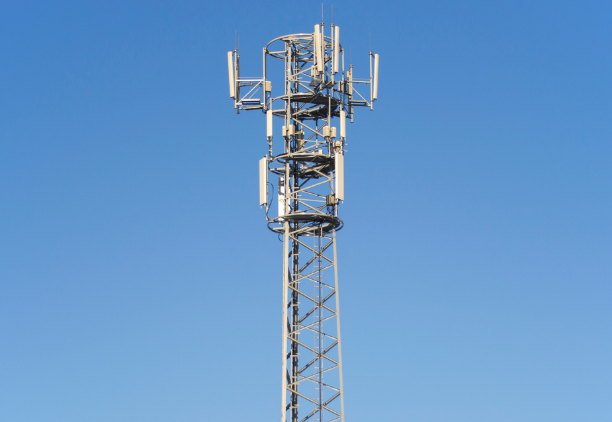
That’s not a misprint—but there is a catch. The typical coverage radius of a 5G macro‑cell is 1 to 4 miles (1.6 – 6.4 km)³, small‑cell or mm Wave sites cover only hundreds of meters and are deployed in dense clusters³. Robust and reliable coverage in your jurisdiction will therefore require a combination of macro‑cells at major intersections and dense small‑cell placements in high‑traffic zones.
The Scale of 5G Growth
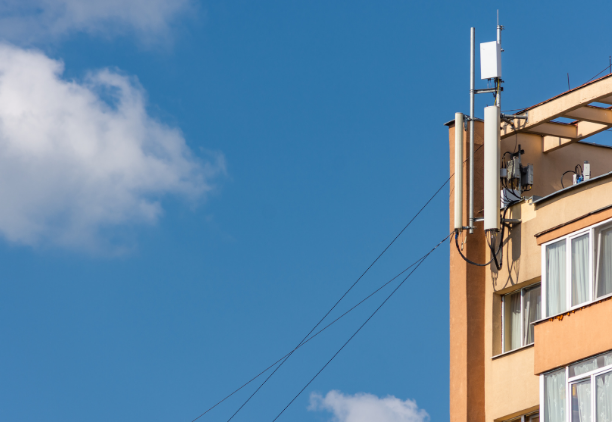
Fortunately, 5G wireless facilities can be affixed to existing structures, including poles, buildings, and billboards. The WTS online Application Management Platform (AMP) allows a single permit to cover multiple small‑cell installations (often up to 20‑30 sites), although exact limits vary by local regulation⁴.
One study now estimates that there will be approximately 2.9 billion connected 5G devices worldwide by 2025, about one‑third of all mobile subscriptions⁵, with average real‑world 5G speeds about 10 – 15 times faster than 4G⁶. That’s how fast 5G is growing.
How 5G Fits Into Existing Communities
So—who is responsible for managing the impact to your community of increased 5G wireless coverage, which is already rolling out across the United States?
The answer: the employees of local jurisdictions. The people who manage, regulate, or otherwise influence planning and zoning for cities, towns, villages, counties, state land departments, and even forest services that have a common interest to help communities benefit by closing wireless‑coverage gaps, which will add growth capacity.
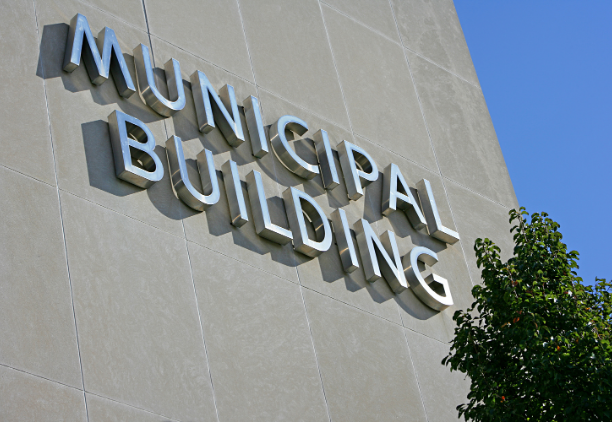
Local Responsibility, Real Impact
WTS can help municipalities of all sizes. Our online Application Management Platform (AMP) and support services accommodate local ordinances as well as state and federal regulations. Best of all, the entire application and permitting process can all be accomplished remotely. No lines; no waiting; no delays. Just an efficient application process to handle the many new applications coming your way.
Imagine these essential considerations, resolved from your own offices:
- Permitting and coordination
- Local, state, and federal adherence to regulations
- Revenue maximization
All of this can be accomplished using an effective, completely online application process. Our turnkey solution minimizes red tape and helps deliver the latest 5G wireless technology application process to your jurisdiction.
Permitting and interdepartmental coordination
Streamline reviews and approvals across departments with a single, organized workflow.
Compliance with local, state, and federal requirements
Ensure every application aligns with applicable regulations at all levels of government.
Revenue tracking and maximization opportunities
Maintain visibility into fees and assets to support accurate tracking and long-term revenue planning.
Footnotes
1. Quora discussion on LTE capacity; legacy figure ≈ 6 500 devices, newer studies cite up to ≈ 10 000 connections.
2. Statista, “Connection density of 4G, 5G, 6G mobile broadband” – 5G supports up to 1 million devices per km².
3. Dgtl Infra, “Cell Tower Range: How Far Do They Reach?” – typical macro‑cell radius 1 – 4 miles; small‑cell/mmWave ranges are much shorter.
4. Municipal permitting guidelines (varies by jurisdiction); many allow a single application for 20‑30 small‑cell sites.
5. Ericsson Mobility Report, June 2025 – global 5G subscriptions projected at 2.9 billion by end‑2025.
6. OpenSignal 2024‑2025 Global Mobile Network Speed Report – average 5G download speeds 10‑15× faster than 4G.
GET STARTED TODAY!